Virtual Visit

Journey through the Pitt Rivers Museum galleries at home


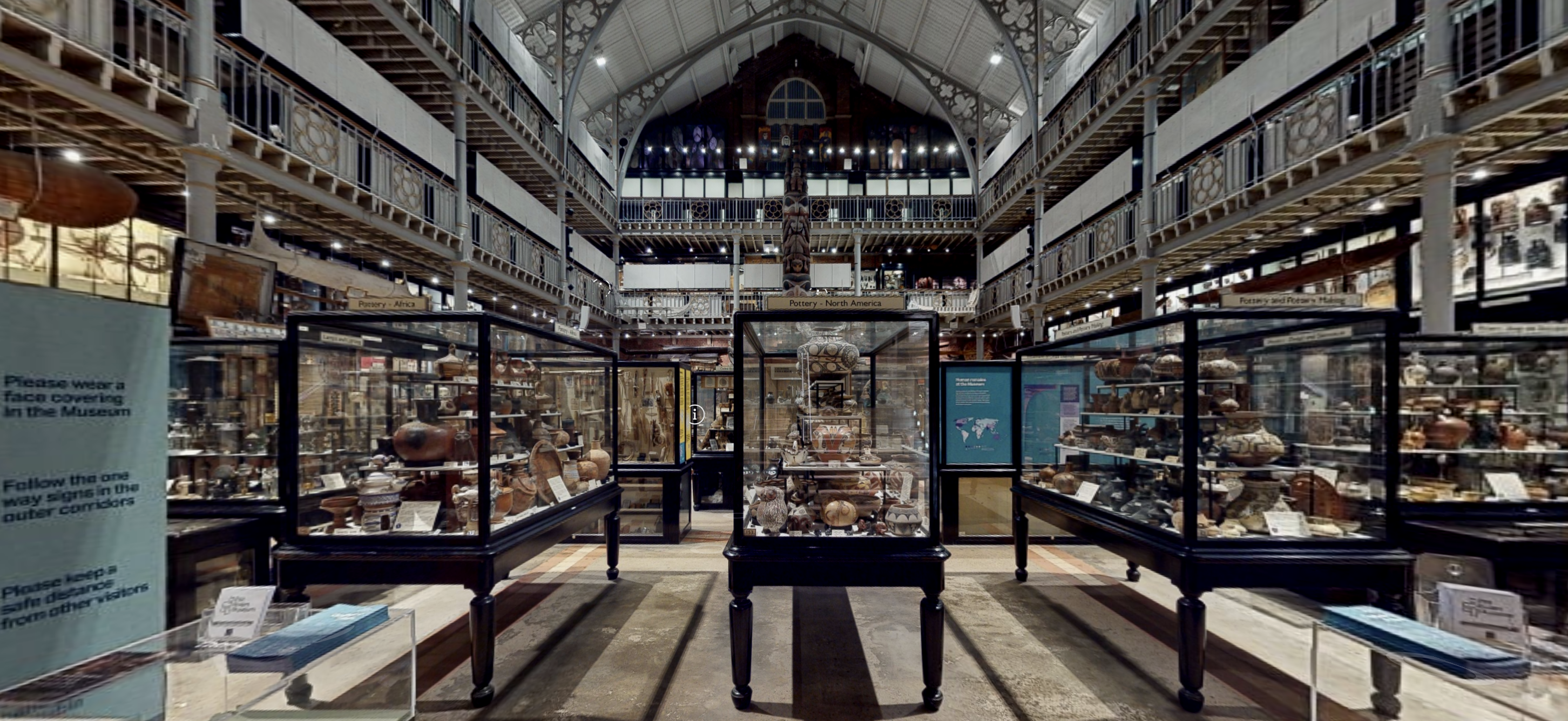
When the museum reopened after the pandemic closures in 2020, new installations in the galleries introduced some of the critical changes in thinking about the displays and museum's history. You can find out more about these with the  points at various cases in the 360 capture of galleries with additional interactive elements.
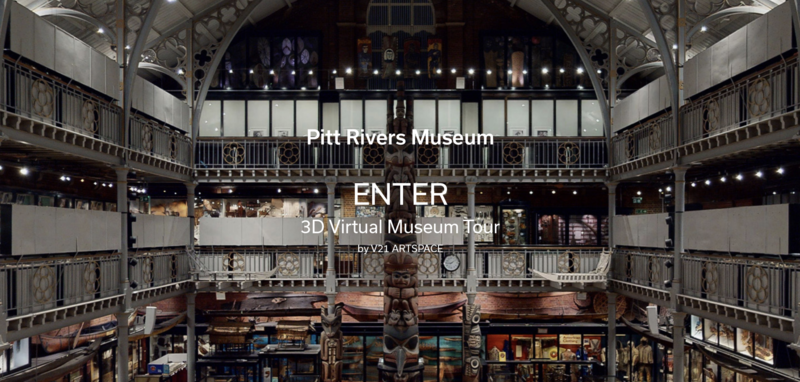


Steps lead down into a darkened room filled with nineteenth-century museum display cases full of lots of different objects

Ground Floor Highlights

The Museum's virtual tour captures the gallery interventions on display in the Museum from 2020-2026.
 

Interactive slides marked with an   icon allow you to read the display text, as well as present additional video and audio content. 


The Introductory Case display included a world map visualising the number of museums collections from different places in the world, with countries associated with the British Empire highlighted, showing the connection between colonialism and collections. Text on the case also introduces the idea of the museum as footprint of colonialism, as well as a contemporary space of representation and resistance.
See more at prm.ox.ac.uk/changing-perspectives

https://view.genially.com/650478bfa8040f0011b7337c


The Case Study for the Fire-Making display introduces how racialised language creates false hierarchies of human beings. Two data illustrations visualise the words used in historic museum documentation to show these hierarchies, and the social and cultural significance of fire beyond a functional use is also discussed. Listen to a recording of Maasai representatives Amos Karino Leukaand and Yannick Ndoinyo share the importance of wooden fire-drills as part of a leadership inauguration ceremony.

See more at prm.ox.ac.uk/methods-of-making-fire


The Case Study for the Mbira display highlights the power in naming. The use of the term 'lamellaphones' for this case is discussed in terms of classification through Eurocentric understanding of musical instruments. Listen to Thabo Muleya explore the connections between place and naming through the history and cultural significance of the mbira musical instrument in Zimbabwe.
See more at prm.ox.ac.uk/mbira


The Case Study for the Smoking and Stimulants display outlines how knowledge is foundational and fundamental to how we see, imagine, understand and experience the world. Take a closer look at the words used in the display label, and watch Fiona Foley's short video work Out of the Sea like a Cloud.
See more at https://www.prm.ox.ac.uk/smoking-and-stimulants-opium


The Case Study for the Hawaiian Feather Cloak display highlights how colonialism seeks to overwrite existing cultural systems in the belief that colonial cultures are superior. Critique of the display label for the Hawaiian Cloak is presented alongside birdsong from the Hart Lab at the University of Hawai'i Hilo.