
Cultural Council
In 2025 a group of global curators, cultural practitioners and knowledge holders gathered in Oxford for a workshop at the Pitt Rivers Museum for the Changing Curatorial Legacies project. A direct outcome of this project was the formation of a ‘Cultural Council’ who will act as a curatorial advisory board to the Museum.
The Cultural Council includes members from Aotearoa, Australia, California, Fiji, Greenland, Hawai’i, Kazakhstan, Minnesota, Nigeria, Papua New Guinea, Sarawak, and Uganda.

Meet the Curatorial Council Members
Abiti Nelson
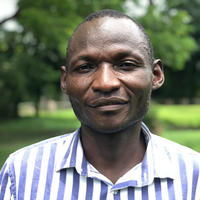
Abiti Nelson holds the position of Principal Curator at the Uganda National Museum responsible for collections management. He recently participated as a curator of the Uganda Museum in returning 39 Ugandan cultural objects from the University of Cambridge Museum of Archaeology and Anthropology in June 2024. Abiti is currently a PhD Candidate at the University of Western Cape in South Africa studying the history of Uganda Museum collections and exhibitions. Abiti has contributed in the publications on Critical Approaches to Heritage for Development, National museums in Africa: Identity, history and politics and Post-Conflict Participatory Arts, The Unseen Archive of Idi Amin published in Comparative Studies of Society and History. His research interest focuses on post conflict community memorials, debates around restitution, meaning of ethnographic collections and tribal society in Uganda in the national museums.
Asta Mønsted

Asta Mønsted is Greenlandic-Danish born in Greenland (Kalaallit Nunaat) and is trained as an archaeologist specialized in Arctic cultural heritage working as an assistant professor at the University of California, Berkeley. Her research focuses on integrating Inuit oral history with archaeological records, while also exploring how contemporary architects can draw inspiration from prehistoric Greenlandic architecture, enabling modern Kalaallit to see themselves reflected in their built environment. She has conducted archaeological excavations in various parts of the world, including in Greenland, Denmark, Germany and Japan, and she was the project manager for the National Museum of Denmark in the large Creative Europe-funded Taking Care project.
Bennae Calac
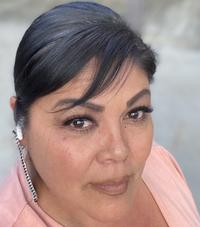
Bennae M. Calac is the granddaughter of Mary Conceptiona Pachito Calac of Pauma Band of Luiseño Indians and Maximillian Calac of Rincon Band of Luiseño Indian. She is the daughter to Edward Cornelius Calac of Pauma Band of Luiseno Indians and Esther Calac of the Huichol People of Jalisco. Bennae is an enrolled member of the Pauma Band of Luiseño Indians, and she is also a proud descendant of the Huichol People of Jalisco. Bennae is honored to be the parent of Malia Tuchily Hill and Edward Onoo Po Hill.
Bennae is a strong Native woman, mother, business owner, mentor, teacher and leader. Over the last 35 years, Bennae Calac has represented Pauma in various political, cultural and administrative capacities. She has served as the repatriation chair since the age of twenty-one and has dedicated her life’s work to the preservation of the culture and traditions of her people. Bennae is dedicated to supporting the preservation and revitalization of Luiseño songs and dances and works with her own children and local youth programs to ensure that this traditional knowledge is instilled in the younger generation. Bennae was elected as Committee Member to the Pauma Band’s Tribal Council in 2008 to 2010, 2010 to 2012 served another 2-year term as Sec/Treasurer and in 2019 Served as Treasure, as a Tribal Leader capacity Bennae interacts with the youth, culture, public and political relations.
Bennae serves on numerous boards and committees, such as the Repatriation Chair for the Pauma Band; President for the Strong Hearted Native Indian Women’s Coalition; Chairwoman for the Native American Fire Prevention Alliance; Board Member for the Pauma Band’s Youth Council; and Board Member for the Pauma Band’s Education & Cultural Board. Co-Founder and Current Executive Director for the 7G Foundation, President and Chairman of the Board for Onoo Po Strategies, 2025 to 2027 current Vice President to the San Diego Archeological Center and appointed by Governor Newsom to serve as a Commissioner for the Native American Heritage Commission. She has also most recently launched Alliance of California Tribal Women (ACTW).
Bennae’s professional expertise includes working in the areas of cultural resource protection, Indian child welfare, substance abuse and domestic violence counseling and tribal law enforcement. Bennae is also an experienced and passionate entrepreneur. In 1999, Bennae established Native Ground Monitoring and Research, a nonprofit cultural preservation corporation, dedicated to protecting and promoting the cultural resources in the southern California region. Native Grounds goal is to support and enhance cultural preservation through language, culture, history and archeological preservation. Bennae took that company, another step and established her first LLC. Native Grounds, Monitoring, Research and Consulting, LLC. President and Chairman of the Board for Onoo Po Strategies is her most recent business which she has developed as a trust for her 2 children.
Dan Lin

Dan Lin is a filmmaker and photojournalist based in Hawai'i. He entered the filmmaking world seeking ways to address the complexity of issues arising in the Pacific. He is primarily interested in telling stories of Indigenous peoples, and their connection to the land and sea, in captivating ways. Dan also serves as the Pasifika Storytelling Lead at Nia Tero Foundation, where he and his team work to uplift Indigenous voices and stories across the Pacific region.
Dilda Ramazan
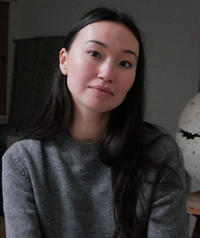
Dilda Ramazan is a curator and PhD candidate at Sorbonne University. She is part of the DAVRA research group. Her main research interests are related to the Central Asian contemporary art scene, mainly that of independent Kazakhstan, Kyrgyzstan, and Uzbekistan.
Guy Ritani

Guy Ritani is a proud Māori Artist, climate justice advocate & human rights defender from Ngāti Toa Rangatira, Ngāti Kahungunu, Ngāti Koata & MacNamara whakapapa. They build collaborative capacity across 3 main focus areas: Climate justice, Food systems & the arts/culture sector. They focus on community organising to develop self-determined development pathways that are culturally, ecologically & equitably responsible. Guy operates across a number of global networks & focuses mainly in the Oceanic region of Australia, Aotearoa/New Zealand & the Pacific. They are deeply passionate about youth leadership & capacity building as a pathway to global climate cultural solutions.
Jack Gillmer

Jack Gillmer is a proud Worimi and Biripi guri of the Gathang language group, and architect who explores Country as the driver of narrative to his architectural approach. He champions First Nations leadership and co-design, drawing on the intersection of cultural knowledge systems and built environment practices to shape multi-sensory, place-based outcomes. With a deep obligation to care for Country, Jack works alongside Traditional Custodians, artists, and storytellers to ensure Country leads the design process.
As recent Galang Residency recipient (Powerhouse Museum & Cité internationale des arts, Paris), Jack investigated reframing museology through a cultural architectural lens, exploring themes, not limited to, rematriation, agency, access, enduring reciprocity & truth-telling, and exhibition display. His research into arts, exhibition, and museums continues to inform his practice including presenting in Australia’s Pavilion at the Venice Biennale as Co-Creative Director for HOME.
Katrina Talei Igglesden
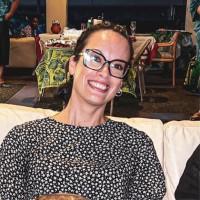
Dr Katrina Talei Igglesden is an academic, director, creative and museum professional of mixed British and Indigenous Fijian ancestry who currently works as the Director of the Oceania Centre for Arts, Culture and Pacific Studies at the University of the South Pacific (Suva, Fiji). With 20 years’ experience working in and with museums – as staff and as a community member – she has contributed to several academic research projects and follow-on impact driven projects focusing mainly on Indigenous Fijian arts and culture, Pacific barkcloth and, most recently, Fiji’s urban youth. Katrina is interested in collaborative anthropology, specifically in reconnecting diasporic communities with their cultural heritage housed in museums by facilitating reciprocal relationships between cultural heritage institutions and communities, as well as the contemporary urban experience of ‘culture’ by young people. Additionally, she sits on several Pacific and Fijian institutional and community-led advisory committees and has curated exhibitions in the United Kingdom, Fiji, Canada and the United States.
Lena Ortega
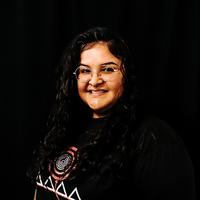
Lena Ortega is a member of the Kw’tsán Cultural committee of the Fort Yuma Quechan Indian Tribe. She is involved in significant efforts to protect Quechan ancestral lands, including advocating for resolutions to safeguard sacred sites such as Indian Pass.
Louisa Onuoha
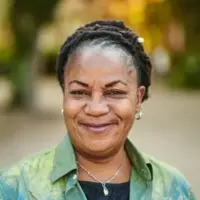
Louisa Onuoha (PhD) is an Assistant Director, Museum Educational Services and Training, National Commission for Museums and Monuments, Oyo, Nigeria. A museum educator/ curator, she combines research with active museum practice creating and initiating various museum programmes. Her research areas include topical and contemporary issues of preservation of intangible heritage, restitution, decolonization, transatlantic slave trade and human trafficking among others. She holds a PhD in Cultural and Media Studies, Institute of African Studies, University of Ibadan, Nigeria and an MA in Creative Arts, University of Lagos, Nigeria. She is a fellow of IVLP, US Dept of State Cultural Preservation Program ; Smithsonian Institution, National Museum of African American History and Culture, NMAAHC ; Columbia University, Global Thought Department and the University of Oxford, Africa Oxford Initiative. She is well published and currently serves as the President of International Council of Museums-Nigeria, Vice President of Commonwealth Association of Museums and a member of various heritage associations.
Roxanne Tsang
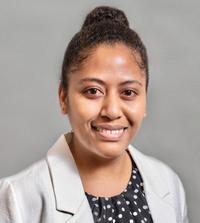
Roxanne Tsang is a Papua New Guinean anthropological archaeologist, early career researcher, and specialist in rock art and archaeology of Papua New Guinea (PNG). She graduated with a PhD in archaeology in 2023 (with Excellence in the Research Thesis) from Griffith University, Queensland, Australia. Currently, she is a British Academy International Fellow with the School of Archaeology, University of Oxford. Her interdisciplinary project (combining archaeological science, ethnography [Indigenous Knowledge], cognition, museum collections, and digital archaeology) explores the nature of mark-making and how some designs are transposed across other media, through time and across space. A strand of her current project is examining ethnographic and archaeological collections from PNG at Pitt Rivers Museum. Prior to moving to Oxford, she was teaching archaeology at the University of Papua New Guinea in Port Moresby.
Sonia Luhong Wan

Sonia Luhong Wan is an artist, curator, and translator from Sarawak, Malaysia. Trained in graphic design, she has worked in arts management, wildlife conservation, and renewable energy access. She believes in the arts as a powerful, intersectional medium for education and awareness beyond self-expression. Sonia is a co-founder and active member of Borneo Bengkel and HAUS KCH, creative organisations fostering cultural and artistic exchange.
Uwagbale Edward-Ekpu
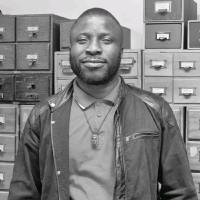
Uwagbale Edward-Ekpu is a researcher and heritage practitioner whose work bridges archaeology, ethnography, and community-centred museum practice. His research examines the heritage, knowledge systems, and material culture of the Edoid-speaking region in Nigeria (the Benin Kingdom, the Esan kingdoms, and adjacent Edoid communities).
As a Research Associate with the Museum of West African Art in Benin City, Uwagbale leads ethnographic fieldwork and contributes to archaeological and conservation projects spanning excavations, surveys, earthen architecture, bronze works, and provenance studies, while facilitating relationships and community participation in research fieldwork. He has also worked extensively on archaeological research with the German Archaeological Institute and the British Museum. Uwagbale has played a key role in reshaping the presentation of Benin collections at the Pitt Rivers Museum, where he co-curated two major displays, The Kingdom of Benin and A 21st Century Benin Bronze. He contributed to Activating the Archive: African Environmental Histories and Knowledges Materialised in Museum Collections and currently serves as a Research Partner on the Making the Museum project at the Pitt Rivers Museum.
Willow Lawson

Willow Lawson is a writer, researcher and community liaison. A descendant of the White Earth Band of Ojibwe in northern Minnesota, she has worked most recently as an exhibit writer for the American Museum of Natural History. Willow is interested in colonial histories of institutions, repatriation and how museums engage with descendant communities and the public. She studied archaeology and journalism at Harvard College and Columbia University, respectively. In 2025, Willow joined the American Wing at the Met as a Research Associate. Willow lives in Brooklyn, NY.
Victor Wang (王宗孚)

Victor Wang 王宗孚 is Executive Director of Artspace on Gadigal Country/Sydney and an Adjunct Curator at the Mori Art Museum, Tokyo. Previously, he was Executive and Artistic Director of M WOODS Museum in Beijing and Chengdu (2019–2025).
Wang’s curatorial practice has developed through sustained engagement with Asia, its diasporas, and the wider Global South, including early roles with the Vancouver Pavilion at the 9th Shanghai Biennale (2012–2013) and the Twelfth Havana Biennial (2015). He has developed major collaborative projects with institutions including Tate Modern, Palais de Tokyo, the Nationalgalerie, Staatliche Museen zu Berlin, and the British Museum. His work increasingly explores intersections between Asia-Pacific histories, diasporic experience, Indigenous practices, and different systems of knowledge.
At Artspace, Wang has developed and supported projects with First Nations and Indigenous artists from Australia and internationally, including Daniel Boyd, Dana Claxton, Hayley Millar Baker, Grace Lillian Lee, Desmond Woodforde, Timothy Cook, and Lawrence Paul Yuxweluptun. Performance and time-based practices have also long been central to his work; he curated Frieze LIVE in 2020 and founded the Institute of Asian Performance Art.
Current Pitt Rivers Museum Liaison
Marenka Thompson-Odlum

Marenka Thompson-Odlum is Research Curator (Critical Perspectives) at the Pitt Rivers Museum. Marenka's doctoral research in history at the University of Glasgow explored Glasgow’s role in the trans-Atlantic slave trade through the material culture housed at Glasgow Museums. At the Pitt Rivers Museum, Marenka leads a research and curatorial programme of work, including publications, exhibitions and interpretive displays that explore new critical histories and pathways through museum collection, bringing them to new and existing academic and public audiences. Marenka is also leading an ArtFund project to commission new objects for the Museum's collections, build new relationships with indigenous communities, and enhance the museum's displays, and is also Co-I on the AHRC-funded project Making the Museum. In 2024 Marenka curated the exhibition Hawaii: Ma Uka To Ma Kai at the Pitt Rivers Museum, involving numerous collaborations and activities with community partners.
Faye Belsey

Faye Belsey is Senior Assistant Curator and Deputy Head of Collections at the Pitt Rivers Museum. Faye joined the Pitt Rivers Museum in 2008 as Collection Move Manager for the project ‘Taking the Past into the Future', redeveloping the entrance of the Pitt Rivers Museum. Most recently she has worked with the Evenki community on the project ‘Wandering in Other Worlds’ which involved a reconciliation ceremony held at the Museum and an indigenous curated redisplay of shamanic Evenki material culture. Faye has also led on repatriation efforts, returning ancestral remains to Aotearoa and Australia, and the first cultural object to the Kenyah Badeng community in Sarawak in November 2024. Faye is currently spending time in the Museum stores, supporting the move of collections to the new Collections, Teaching and Research Centre.

