Beyond the Binary
https://www.youtube.com/embed/mfoPYQDvyDk?si=aEKobhsb-0yawZ5M

The Pitt Rivers Museum is committed to standing as an ally with LGBTIAQ+ communities and creating space for self-representation. We celebrate the strength and agency of LGBTQIA+ communities and support individuals and groups in challenging societal binaries around gender, sexuality and power dynamics.
Beyond the Binary was a project supported by the National Lottery Heritage Fund which put LGBTIAQ+ stories told by LGBTIAQ+ people at the heart of the museum – from it’s public galleries, to its digital databases. This project continued work at the museum which contests any notion that LGBTIAQ+ lives are a ‘western’ invention, a ‘new trend’ or that queer people do not have history. It was developed through consultation with community partners, and built on work conducted in 2016-2018 as part of the Out in Oxford LGBTQ+ museums trail initiative. Beyond the Binary focussed specifically on making the museum’s collections available to communities with LGBTIAQ+ lived-experiences to help them uncover and narrate their own stories, challenging the erasure of queer voices. In so doing, the project reflected on material from across the globe and from many historical periods that were already part of the collection, as well as commissioning and collecting new material to add contemporary queer perspectives.

Working with a broad range of partners, from researchers to community activists, the project challenged historical interpretations of the museum’s collections – offering alternative understandings from people with different identities, as well as identifying human histories that are unrepresented as a result of intolerance. The intention of the Beyond the Binary's work was that no individual or group would feel excluded from the museum because of their sexuality or gender, and that all visitors – however they might identify themselves – could understand humanity better.
Check out the Beyond the Binary FAQs and further resources for more information about the project's purpose and for signposting to further resources.
Project Aims
The Beyond the Binary project aimed to:
- Collaborate with partners to bring varied LGBTQ+ lived experiences, stories and histories into the heart of the Pitt Rivers Museum
- Be a space in which difficult histories, including the impact of colonialism on ‘queer’ lives across the globe, can be reflected on, acknowledged and the legacy of colonialism in the present, including in the museum space, disrupted
- Work co-creatively with local, national and international partners to highlight human histories that are currently under-represented in the Pitt Rivers Museum and at heritage sites in general
- Develop and test an ethical framework for collecting by working with partners to acquire new items that highlight and celebrate traditions of gender and sexuality ‘non-conformity’, and items that communicate the continuing impact of colonial ways of categorising and regulating sex and gender in today’s world
- Explore the effectiveness of adopting a non-binary approach to curating, collecting and museum engagement work, where questioning and a multiplicity of perspectives within interpretation is central, and a singular curatorial voice and presenting absolute answers is challenged
- Shape Pitt Rivers Museum as a welcoming space so that no individual or group feels excluded from the museum because of their sexuality or gender, and so that all visitors, however they might identify themselves – can understand humanity better
- Co-creative approaches will inform all areas of work, with project partners shaping all areas of the project in meaningful ways
- Takeover the museum’s programming, collaborating with community partners to develop events, activities and interventions that will generate awareness and visibility of LGBTQ+ heritage
- Recognising the museum’s limitations and gaps in our knowledge, expertise and experience, we’ll work with partners to examine our own practices and biases, and to ensure that expertise from people with LGBTQ+ lived experiences shape the project as it develops
- Ensure that learning from the project will inform not only the policies and practices of the Pitt Rivers Museum, but also our partnership museums locally and nationally
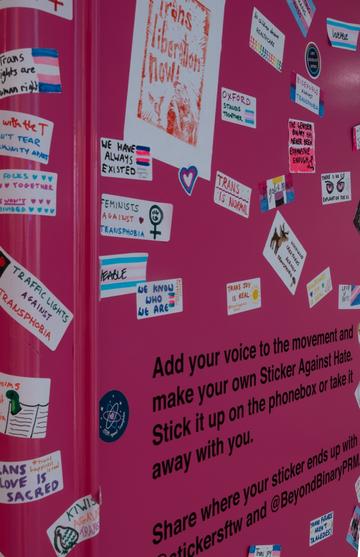
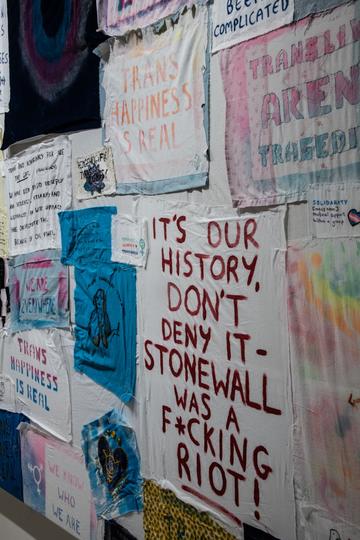
What binaries are we looking beyond?
Binaries are, simply put, two opposites or mutually exclusive terms, such as on/off, left/right and good/evil. In this project we worked beyond the binaries of gender, sexuality and power: Male/Female, Straight/Gay, Victor/Victim.
Read more about terminology, including ‘LGBTIAQ+’ and ‘Queer’.
Why is this work important to the Pitt Rivers Museum?
This museum is rooted in colonialism and some histories and voices have for too long been ignored, erased or omitted. We hope this exhibition is a positive step in tackling oppression, which LGBTIAQ+ communities often feel in spaces such as this one.
In a time of challenging politics – nationally and globally – the museum is standing as an ally with LGBTIAQ+ communities around the globe. We are an ally to the Trans community and will not tolerate transphobia. The museum continues to make changes to our permanent displays and work with communities and partners, drawing on our core value of inclusivity.
Read more about the museum's core values and how we align our engagement and displays with these values in our 2022-27 strategic plan.
Exhibition - 'Beyond the Binary: Gender, Sexuality, Power'
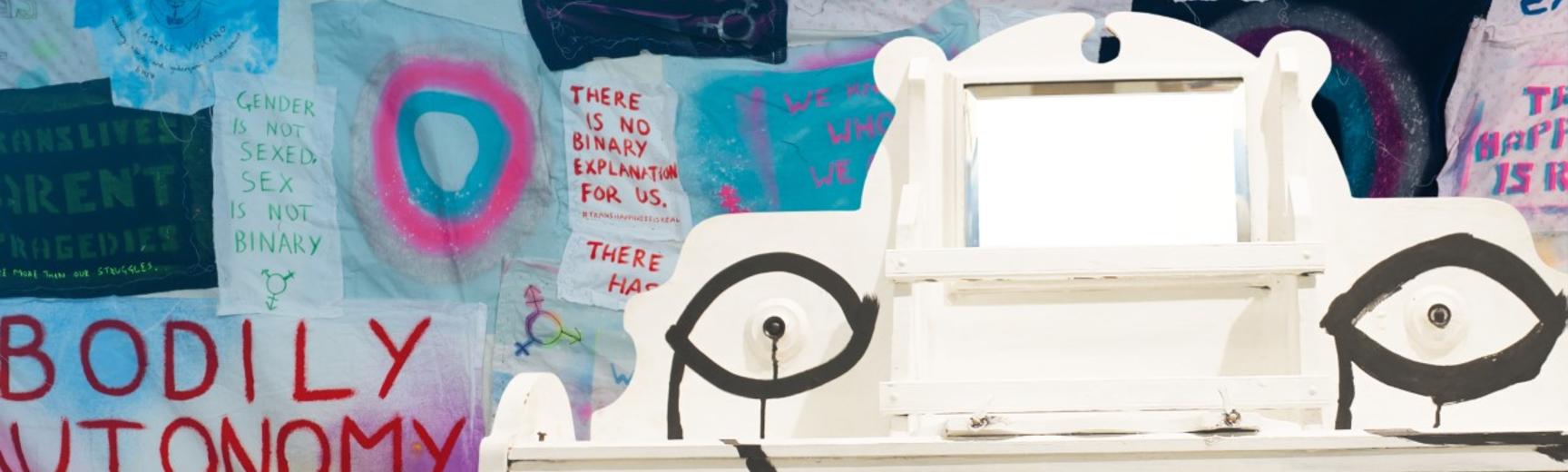
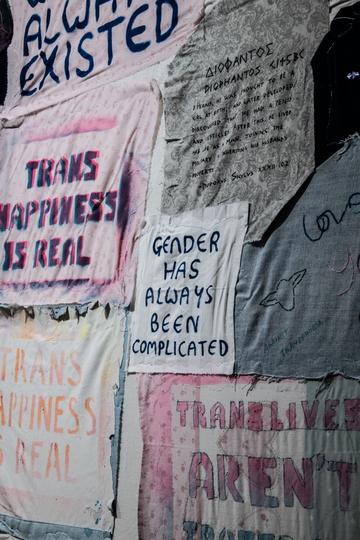
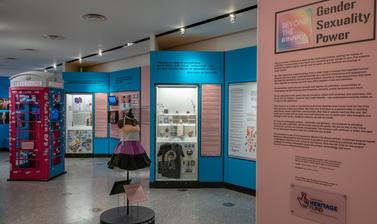
In collaboration with over 40 community partners, a major outcome of the project was a large scale exhibition (June 2021-March 2022). This experimental exhibition shared stories about LGBTIAQ+ identities, asking visitors to think about the ‘binary’ groups we often categorise people into, and consider how these rigid groups don't work for many people, often causing them to feel oppression, exclusion and pain. Beyond the Binary also asked visitors to look beyond oppression, and highlighted some of the ways people have reclaimed power over their bodies and sexual and gender identities, and have forged thriving communities. This exhibition celebrated life experiences that might not fit what are often seen as societal 'norms'. In the exhibition, we used the term 'queer' to talk about these experiences. This exhibition was experimental as it intentionally challenged traditional methods of curation, choosing to highlight the ‘authors’ behind the texts and remind the audience that the exhibition was about personal, lived-experiences. We did not set out to present facts or uphold the idea that museums are neutral spaces. All are welcome in the exhibition’s digital spaces to reflect with kindness and openness. Our aim is that all visitors – however they might identify – can understand humanity better as a result of this exhibition.
Access the digital legacy of the exhibition or go to the 'listen and watch today' tab to watch curator tours and listen to the Beyond the Binary podcast.
New collecting and interpretations
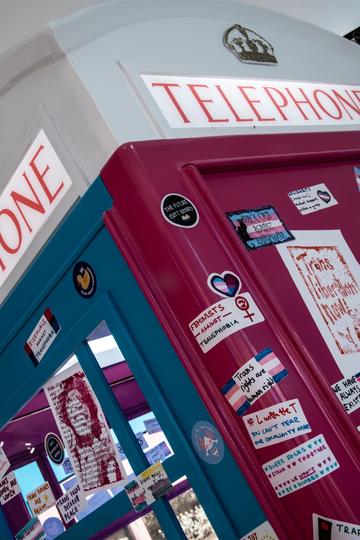
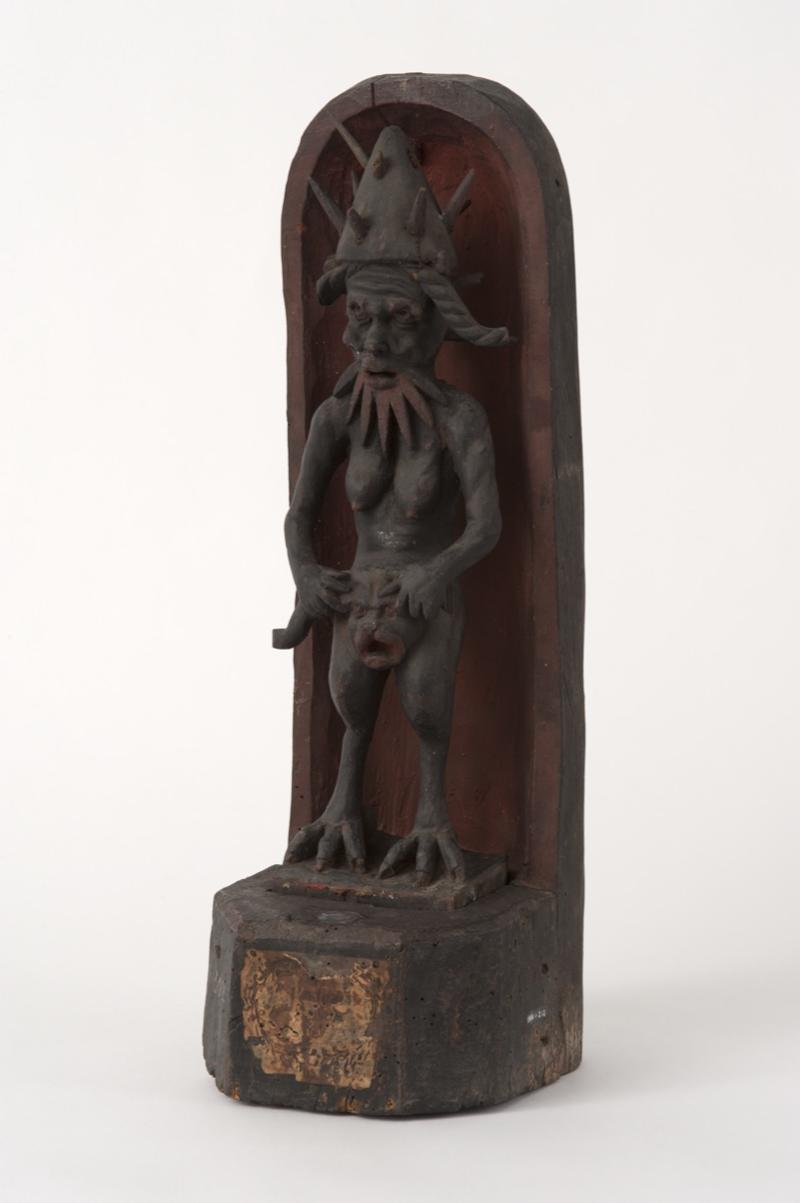
In addition to exploring the existing collections, the project included a community-focussed research and acquisition programme for LGBTIAQ+ cultural and historical artefacts. Objects were collected from British communities and across the globe that highlight traditions of gender non-conformity, bringing British LGBTIAQ+ heritage into conversation with global LGBTIAQ+ material culture. In addition to this collecting, Beyond the Binary worked with partners to commission new artworks and items that have been accessioned into the collections, embedding queer stories into the heart of the museum. Existing collections items were also researched and reinterpreted by our partners and redisplayed, so that the queer stories they inspire could be shared with all our visitors. Newly collected and commissioned items have also gone on display.


Museum perspectives
Project curators also drew out a number of relevant perspectives from the museum collections. Read more about:
Christian Symbols of Non-Conformity
Ancient Greece and lesbian culture
Kabuki (traditional Japanese theatre)
Bottling witches and witchcraft
Necklaces and Catherine Hilda Duleep Singh
The archaeologists Dorothy Garrod and Francis Turville-Petre
Teacher Notes
Beyond the Binary Teacher Pack
Feedback
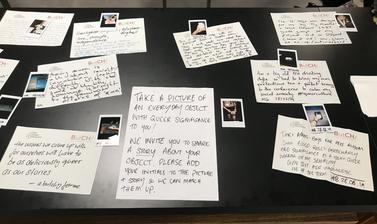
Feedback from our collaborators and from the public at events was crucial to the project, shaping our ways of working and the programme along the way. We are grateful to our evaluators, ButCH, who devised creative ways to capture and interpret feedback.

Events and Activities
The project delivered a vibrant programme of events, from film screenings and webinars, to discussion-based workshops, placard making, music nights and accessible tours (outlined below). LGBTQIA+ programming and partnership continues to be a key part of the museum’s work. Keep an eye on the museum’s What’s On pages for information on events.
Beyond the Binary events included:
- Behind-the-Scenes tours and workshops.
- Audio-described tours and accessible exhibition openings.
- Exhibition talks and walkthroughs with Project Curator, Jozie Kettle and Head of Public Engagement, Andy McLellan. Watch Jozie's talk here and Andy's talk here.
- Intervention tours in the main Pitt Rivers Museum space.
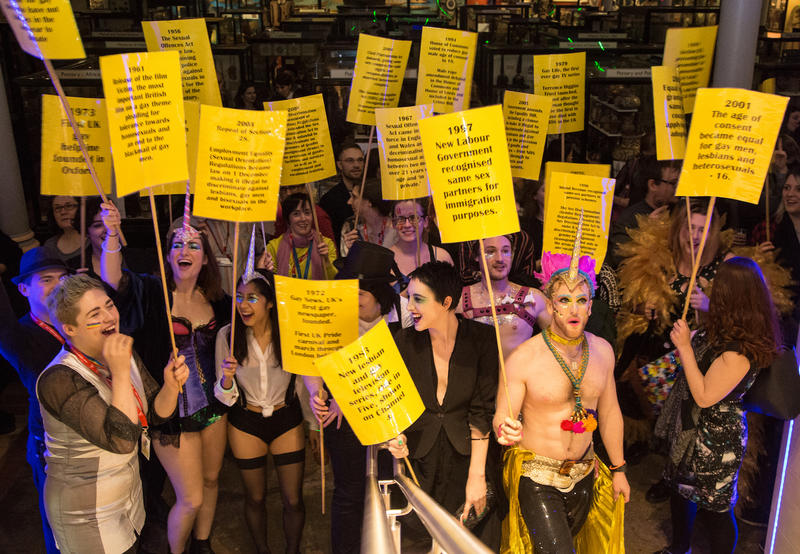
- Four late-night museum events, including two take-over nights with My Normal and events to mark LGBT History Month in 2019 and 2022 (see the programme for the 2022 event here).
- A zine-making workshop in collaboration with My Normal, Trans Happiness is Real, and Common Books.
- A family-friendly clay workshop.

- An archiving talk with Stefan Dickers about the LGBTQIA+ archives at the Bishopsgate Institute. Watch the recording of the talk here.
- A workshop on LGBTQ+ visibility with the Kite Trust. Watch the recording here.
- A screening of the film Leitis in Waiting, with a Q&A with one of the film's stars, Joey Joleen Mataele - a leader in the LGBTQI and human rights movements in the Pacific. Watch the trailer for Leitis in Waiting here.
- 'Drag Queen Story Corner' events with Asifa Lahore, Britain's first out Muslim drag queen, curated by Jason Katterhorn of Sassify Zine.
- A choral session on the museum balcony with the East Oxford community choir Singing at Ark T.
- A book talk with Dr B Camminga, author of Transgender Refugees and the Imagined South Africa: Bodies Over Borders and Borders Over Bodies (Palgrave 2018), in conversation with Ruth Ramsden-Karelse, DPhil researcher in the Faculty of English and Literature.
- A talk in our research spotlights series.
- An interactive, inclusive workshop exploring themes and objects around faith, spirituality and queerness in a heritage setting with Shaan Knan (he/him) of Twilight People.
- A workshop on the futures of LGBTQIA+ representation in heritage spaces with Professor Jana Funke (University of Exeter) and Project Curator, Jozie Kettle.
- A story morning with Steve Boyce, Chair of Trustees and an ex-Primary Headteacher, who read Stonewall: A Building, An Uprising, A Revolution by Rob Sanders.
- A webinar titled 'Ubuntu: Defending a Humanity of Difference', part of our Radical Hope talk series. The webinar was an opportunity to discuss the experience of Congolese LGBTIQ+ people and to give voice to their struggle for dignity. Speakers at this event included:
- Julie Makuala Di Baku - a Congolese lesbian activist from Kinshasa, founder and executive director of Oasis, a Congolese association for Lesbian, Bisexual and Trans women.
- Pamela Tekasala Sirius - a transgender man, journalist and LGBT activist living in Kinshasa.
- Orphée Mubake - a human rights activist who previously worked for the association 'Si Jeunessse Savait', head of the Mwangaza structure based in Kinshasha, and operator of the green line of the association 'Progrès Santé Sans Prix' (PSSP).
- Régis Samba-Kounzi - a French-Congolese-Angolan photographer and activist who lives and works between Paris and Kinshasha whose 'Lolendo' series (2015) made powerful additions to the Beyond the Binary exhibition.
- Thomas Hendriks - a postdoctoral research fellow at the KU Leuven University (Belgium) who works on queer masculinities in Kinshasa and Kisangani.
- Scaly Kep’na - a human rights activists, musician, radio maker and founder of the organization Jeunialissime in the Democratic Republic of Congo working towards changing social perceptions of LGBTIQA+ persons.
- A webinar titled 'Takatāpui & Queer Pasifika: Representation and Decolonisation in Museums, Galleries and Archives', part of our Radical Hope talk series. The panel discussed decolonising and “queering” the museum as inextricably related practices, looking at how gender and sexual identities beyond the colonial Western binary can and should be represented respectfully. Panellists included renowned Samoan fa'afafine artist and writer Dan Taulapapa Mcmullin, māhū activist and film-maker Hinaleimoana Wong-Kalu of Hawai’i, and Dr Elizabeth Kerekere, Takatāpui scholar, politician and artist from Aotearora, New Zealand. Watch a recording of the talk and find out more about the speakers here.
- A webinar titled 'Access All Areas', part of our Radical Hope talk series. The panel discussed what works, what doesn’t and what a truly accessible future might look like in our Arts & Heritage spaces. Panellists included Professor Richard Sandell (University of Leicester), Mara Gold (University of Oxford and the Pitt Rivers Museum), Lady Kitt (Social Art Network, Curious Arts), and Martin York (Extra Care, Diversity Role Models). Watch a recording of the talk and find out more about the speakers here.
- A set of Alternative Pride Talks, looking at alternative possibilities to mainstream pride and better representation within the community. The event included talks from Anick Soni of UK Black Pride, Sarah Savage of Trans Pride Brighton, and Ju Gosling Regard: Supporting Disabled LGBTQ People, a panel discussion with local organisers and activists, including Oxford Pride and Common Ground, and an Activism 101 Workshop with Jack Doyle of Action for Trans Health.
- A webinar titled 'Natives Inspired: Activism and Empowerment in the Arts', part of our Radical Hope talk series. This webinar featured several Indigenous artists who convey activism through their creations, both in and outside of the museum experience. The discussed what inspires their work, how they incorporate activism into the artistic process, and what museums and art collectors can do to create a respectful relationship with Indigenous artists. This event was curated by Beyond the Binary community curator and Métis artist, Dan Laurin. Dan was joined by Lucy Fowler (she/her) from The Mamawi Collective and Manitoba Métis Federation's Two-Spirit Council, Cree beadworker and illustrator Nalakwsis (they/them) and mixed-media artist Sydney Pursell (she/her) of the Iowa Tribe of Kansas & Nebraska.
- A launch event for Mara Gold's debut book Ancient Myths and Legends Without Men.
Download the Beyond the Binary events programme.
Exhibition tours
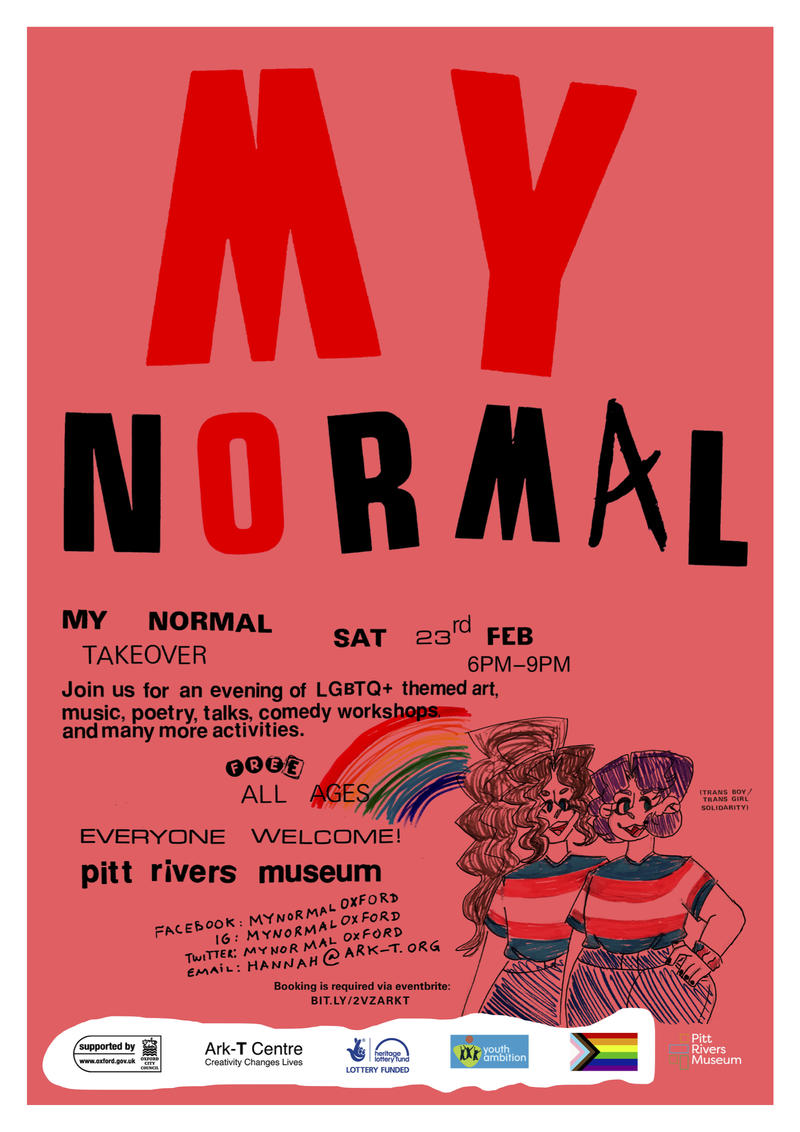
To launch the project in February 2019 Oxford LGBTIAQ+ youth group, My Normal, took over the museum. Watch the video documenting their incredible night of music, discussion, drag, dance and activism.
Although the project's exhibition is now finished, you can still tour it virtually with these curator-led video tours:
Podcast episodes
Looking for something to listen to on your commute? The project team and community curators recorded podcasts about some of the material researched, reinterpreted and commissioned as part of the Beyond the Binary project.
Public talks and workshops
And finally, learn more about the work of the project through these recordings of project events and talks:
Community Curators
Rebecca Colmer; Catherine de Guise (She/Her); Harriet Haugvik (She/Her); Dan Laurin (He/Him); Lance Millar (He/Him, They/Them); Shakira Morar (She/Her); Zoe Nunn (She/Her); Meg Roberts (She/Her); Matthew Scott; Sophie Seeyave (She/Her); Cameron Wallis (He/Him, They/Them).
Beyond the Binary Project Team

Project Officer, Hannah Bruce (She/They)
As project officer on the HLF-funded Beyond the Binary project Hannah worked to develop partnerships, ran the event programme, and conducted general project co-ordination. Their role also included advising and working with the wider museum team, looking into the legacy of the project with a look to making permanent changes within the museum.
They have also worked with Ark-T as Youth Music Project Manager, working on their ‘Music against Prejudice’ project, looking at music inclusion, specifically focussed on inclusion of LGBTIQA+ and disabled young people. In 2015, they founded My Normal, a creative LGBTIQA+ youth group which fed into their work at Ark-T. Since then Hannah has been interested working mainly on projects such as Beyond the Binary that have the opportunity to support LGBTIQA+ lives.

Project Researcher, Mara Gold
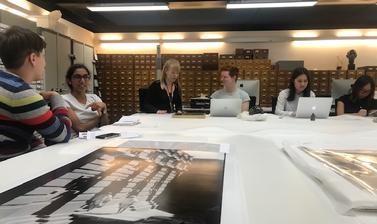
As Research Assistant, Mara Gold spent four months undertaking in-depth research into the museum collections to kick-start the exhibition process. Mara also researched and suggested new material that could be collected as part of the project and continues to collaborate on the exhibition's development. Mara was concurrently working on her DPhil in Classical Languages and Literature based at St Hilda's College, Oxford. Mara works on female homosociality and the influence of the ancient world on women's concepts of gender, sexuality and feminism in the late 19th/early 20th century. She has a particular interest in queer nostalgia as well as understanding and preserving queer heritage. During her time working on the project, she also co-convened the Oxford Queer Studies Network based at TORCH and sat on the steering group for Queer Research UK (QRUK), a new national network.
Prior to commencing her DPhil Mara was employed in the arts and heritage sector, including as a researcher at the V&A, where she worked on LGBTQ+ network. She has additional postgraduate qualifications in Advanced Theatre Practice (Royal Central School of Speech and Drama), Archaeology (UCL) and Modern History (Oxford). She also many years of experience as a theatre practitioner and workshop facilitator, focussing on exploring identity through drama and working with teenagers and adults with learning disabilities.

Collections and Exhibitions Officer, Olivia Sharrard (She/Her)
Olivia Sharrard was the Collections and Exhibitions Officer for Beyond the Binary whilst also studying for her MA in Museum Studies at UCL. Her research interests coalesce around themes of social justice in museums and she has a great interest in display and exhibition development. Olivia also volunteered as the Assistant Collections Manager at Thame Museum during her time on the project.
Through her background in commercial archaeology, Olivia previously worked at the Jorvik Viking Centre in York, championing and facilitating disability access within the museum. She continued her employment within the museums and heritage sector at the University of Oxford Botanic Garden and Arboretum, before joining the Beyond the Binary team at the Pitt Rivers. Olivia has experience of project coordination with the University of York, and of working collaboratively during a heritage project in Egypt.
The project team also included: Project Curator, Jozie Kettle (She/Her); Social Media Assistant, Cameron Wallis (He/Him, They/Them); Head of Public Engagement, Andrew McLellan (He/Him); and Exhibitions Officer, Zena McGreevy (She/Her).
Other contributors
Beth Asbury (She/Her); Braudie Blais-Billie; ButCH; Dotty Clay (They/Them); Sarah-Joy Ford; Thomas Hendriks; Jason Kattenhorn; Jenna Lee (She/Her); Kelsey Lee; Jessica McMann (She/Her); Oxfordshire Drag Collective; Régis Samba-Kounzi; Suzy Prior; Jon Sleigh (He/Him); @stickersftw; Stonewall; Trans Happiness Is Real; Valentino Vecchietti (She/Her, They/Them); Elijah Wells (He/Him); Patrick Wolf; Ela Xora; Beyond the Binary Young Filmmakers; My Normal.
Developing collaborative ways of working with community members and LGBTQIA+ organisations was crucial to the Beyond the Binary project. We are grateful to the many collaborators who helped shape the project and its events programme and those who worked with us to research, reinterpret, commission and collect material.
A special thanks also goes to the members of the public who attended the project and exhibition development workshops and events, to the Pitt Rivers team who have supported the exhibition in countless ways, and to the Beyond the Binary Steering Group.





Thanks to National Lottery players
Digital event series supported by:


